Mind Modes®
EVERY CHILD THINKS DIFFERENTLY. EDUCATION SHOULD TOO.
Most educational systems are built around a single standard. Every student follows the same structure, sits the same exams, and is measured against the same outcomes. The ones who fit the mould succeed. The ones who do not are labelled slow, difficult, or unmotivated.
But the problem is rarely the student. It is the mismatch between how a child naturally thinks and how they are being asked to learn.
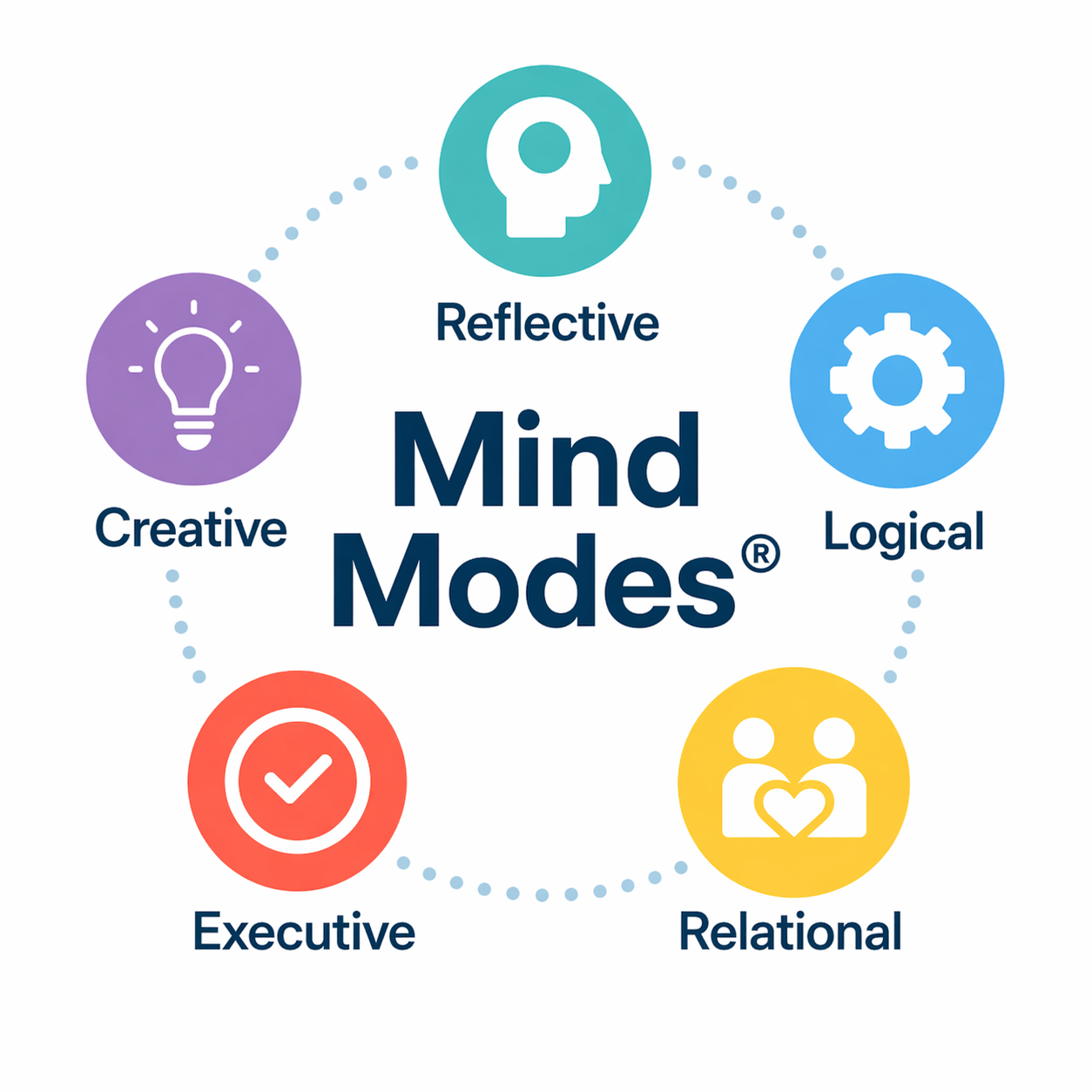
Mind Modes® is a registered cognitive and stress pattern system developed by Ivy Aulia from the integration of neuroscience, cognitive and behavioural psychology, emotional intelligence, and coaching psychology. It maps five natural thinking modes that every person has, and shows how those modes shape the way people learn, communicate, make decisions, and respond under pressure. Applied to education, Mind Modes® gives parents, educators, and institutions a practical language for understanding how different minds work, so that every child can be supported in a way that fits how their brain actually functions, rather than how the system expects it to.
The Missing Piece
WHAT EDUCATION GETS WRONG ABOUT HOW CHILDREN LEARN
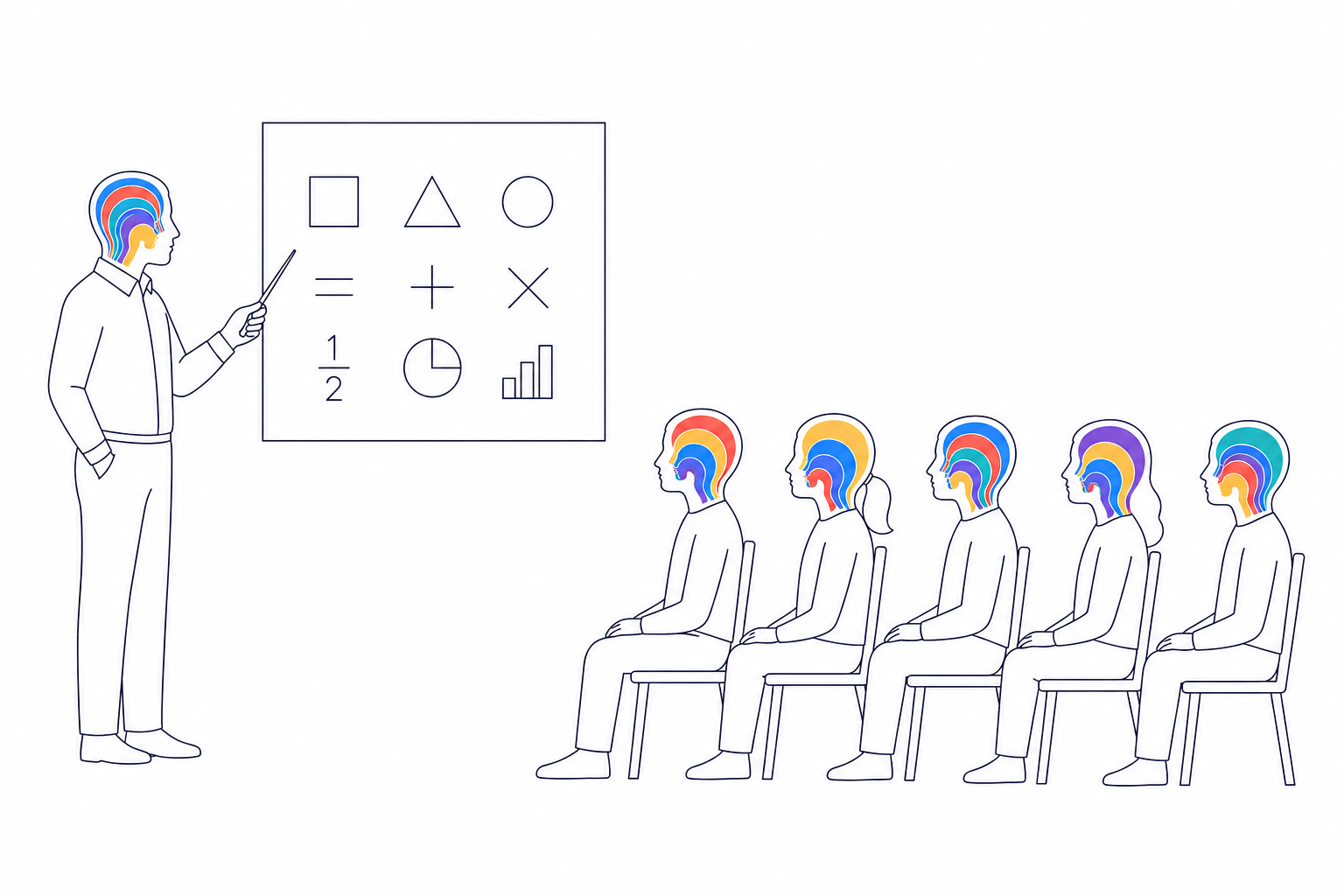
Most educational systems were built to produce consistent, measurable outcomes. They were designed for efficiency, not for the diversity of human minds. And while they have helped many students succeed, they have also left many others behind, not because those students lacked ability, but because the system was never built for how their minds actually work.
The consequences of this mismatch are not small. When a child cannot find themselves in the way they are being taught, they begin to draw conclusions about their own intelligence. They decide they are not academic, not talented, not capable. Those conclusions follow them long after they leave school.
The most common signs of a thinking mode mismatch in education:
- A student who is highly intelligent but consistently underperforms in structured exams
- A child who is labelled disruptive or inattentive when they are actually understimulated or processing differently
- A student who thrives in one subject but struggles in another, not because of ability but because of how the content is delivered
- A teenager who loses confidence not because they failed but because they were compared to students who think differently
- A child who is pushed toward a career path that fits the family’s expectations rather than how their mind naturally works
- A student who shuts down under exam pressure because nobody has ever helped them understand their stress response
These are not discipline problems. They are not motivation problems. They are cognitive and stress pattern mismatches. And they are entirely addressable when the adults around a child understand how that child’s mind actually works.
This is where Mind Modes® changes everything.
The Mind Modes® Approach
HOW Mind Modes® CHANGES THE WAY WE UNDERSTAND LEARNERS
Mind Modes® was developed by Ivy Aulia as a cognitive and stress pattern system grounded in neuroscience, cognitive and behavioural psychology, emotional intelligence, and coaching psychology. While its applications span individuals, relationships, organisations, and career development, its impact on education is among the most significant.
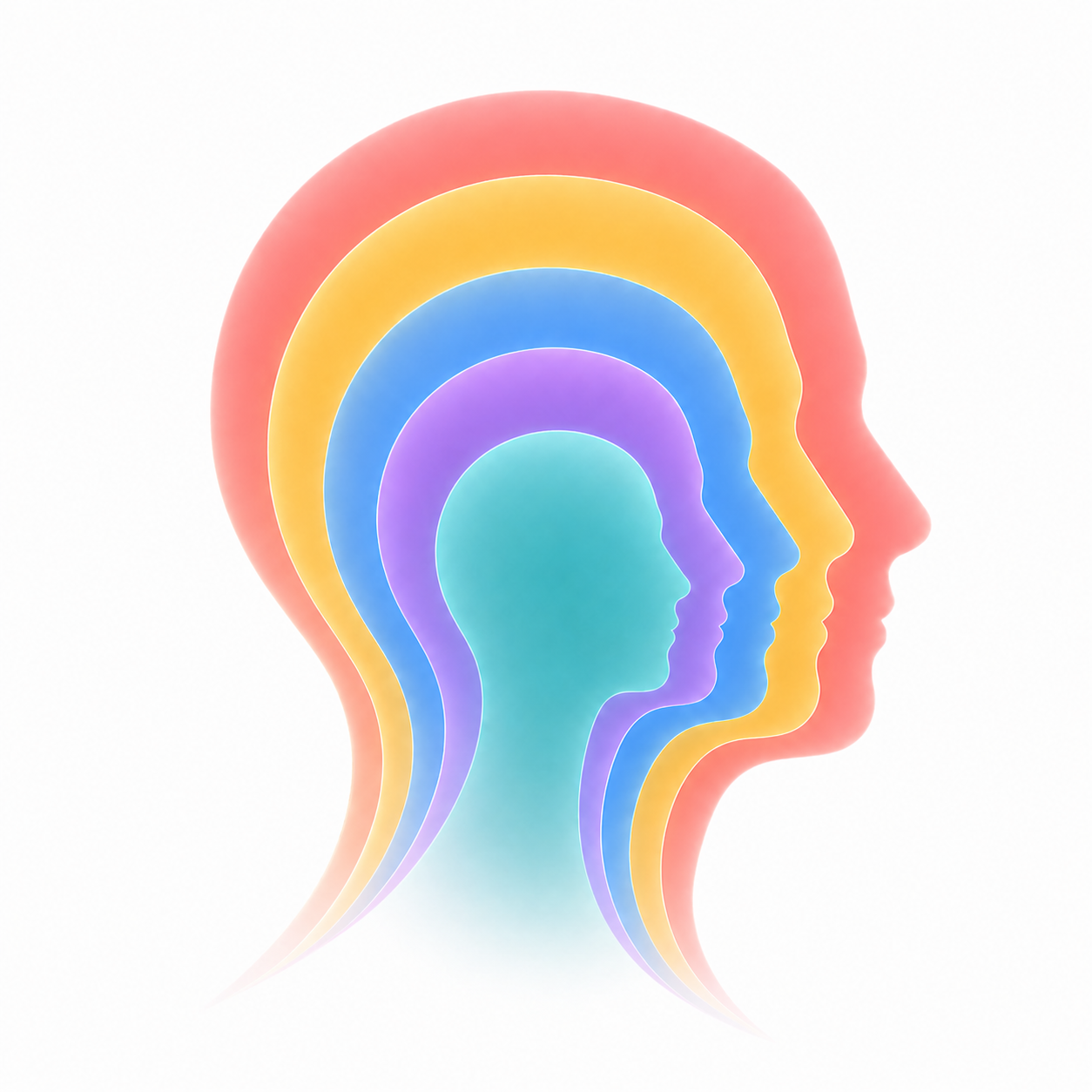
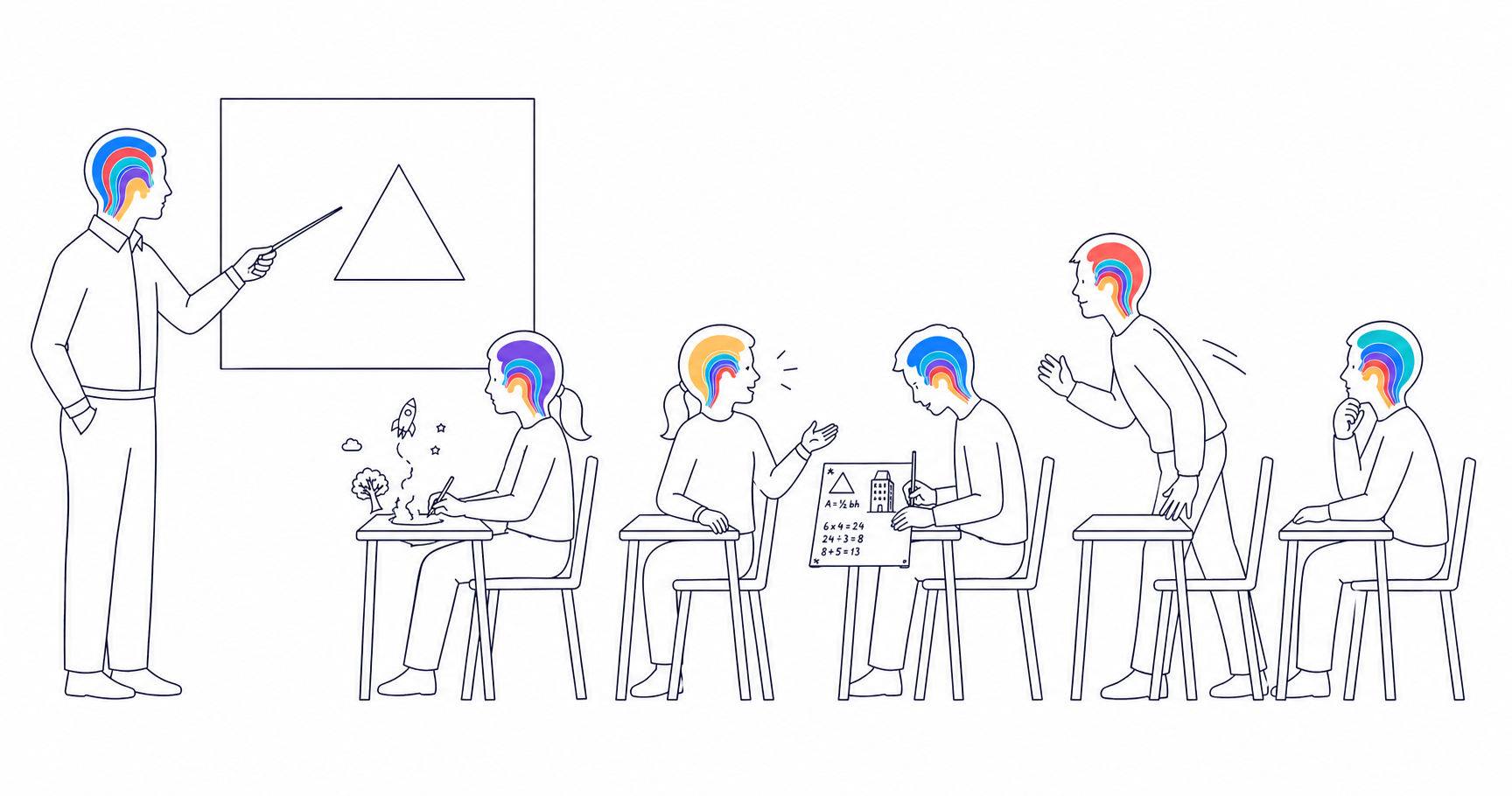
Every person has five thinking modes. In an educational context, these modes shape how a student absorbs information, how they engage with teachers, how they respond to pressure, and what kind of environment helps them thrive.
Understanding a child’s Mind Modes® blend does not put them in a box. It does the opposite. It reveals the full range of their cognitive strengths and shows where they need more support, more space, or a different approach entirely.
Here is how each mode tends to show up in a learning environment:
- Reflective Mode
This student needs time to think before responding. They process deeply and learn best when they can connect new information to meaning and experience. Rushing them or demanding quick answers creates anxiety rather than learning. They often appear quiet or slow but are frequently the deepest thinkers in the room. - Creative Mode
This student thinks in possibilities and connections. They become disengaged when confined to rigid structures and come alive when given freedom to explore, imagine, and express. They are often labelled unfocused when they are actually processing in a non-linear way that does not fit the standard classroom format. - Logical Mode
This student wants to understand how things work and why. They respond well to structure, clear explanations, and step by step reasoning. They can appear cold or detached in group settings but are often the most reliable and precise thinkers when given the right conditions. - Relational Mode
This student learns through connection and conversation. They need to feel safe, seen, and emotionally supported before they can absorb academic content. Conflict in the classroom, tension with a teacher, or social difficulties can completely block their ability to learn, regardless of their intellectual capacity. - Executive Mode
This student is action-oriented and results-driven. They become frustrated with slow pacing, repetition, or excessive explanation. They thrive when given clear goals, autonomy, and the opportunity to lead or complete tasks independently. Under pressure they can become controlling or impulsive if they have not learned to access their other modes.
Most classrooms are designed primarily for Logical and Executive learners. Reflective, Creative, and Relational learners are often the ones who slip through the cracks, not because they are less capable but because the environment does not match how their minds work.
Mind Modes® gives parents, educators, and institutions the language and the tools to change that.
Beyond Labels
WHAT Mind Modes® REVEALS THAT GRADES AND LABELS CANNOT
A grade tells you what a student produced. It does not tell you how they think, what conditions help them perform, or why they struggled in the first place. A label like “gifted,” “slow,” “difficult,” or “unmotivated” describes a behaviour. It does not explain the thinking pattern underneath it.
Mind Modes® goes beneath the surface. It reveals:
- Natural cognitive strengths
Every student has modes that come more naturally to them. These are not skills they have learned. They are ways of thinking that feel effortless because they are aligned with how that person’s mind is wired. When education builds on natural strengths rather than constantly targeting weaknesses, students develop confidence much faster. - Blind spots and underused modes
Every student also has modes they use less naturally. These are not permanent limitations. They are areas that need more patient, targeted development. Understanding which modes are less developed helps parents and educators support growth without labeling the student as deficient. - How stress affects learning
Every student has a stress response pattern that changes how they think and behave under pressure. An exam, a conflict with a friend, tension at home, or a difficult teacher can trigger a stress response that overrides a student’s natural strengths entirely. Understanding a child’s stress pattern means you can support them before they shut down, not after. - What kind of environment helps them thrive
Different thinking modes need different conditions to perform well. Some students need quiet and time. Others need movement and interaction. Some need structure. Others need freedom. Mind Modes® identifies what a specific child actually needs, not what the average student is assumed to need. - Why certain subjects feel easy and others feel hard
Subject difficulty is often not about intelligence. It is about alignment between the thinking demands of the subject and the student’s natural modes. A Creative mode student may find mathematics frustrating not because they cannot think logically but because the subject as taught rarely invites imagination or exploration. A Reflective mode student may excel in literature and struggle in fast-paced group discussions. Understanding this transforms how we teach and how students understand themselves. - Career and path alignment
One of the most damaging outcomes of education that ignores cognitive diversity is students who are guided toward careers that do not fit how their minds work. A student pushed into medicine because of family expectations but who has a dominant Creative and Relational mode will likely struggle not because they lack intelligence but because the environment does not match their natural cognitive strengths. Mind Modes®
helps students and parents make more informed, more honest decisions about future paths.
What Mind Modes® ultimately reveals is this: most students who are struggling are not failing. They are mismatched. And mismatches can be understood, addressed, and resolved when the right system is in place.
For Educators
WHAT Mind Modes® OFFERS TEACHERS AND SCHOOL STAFF
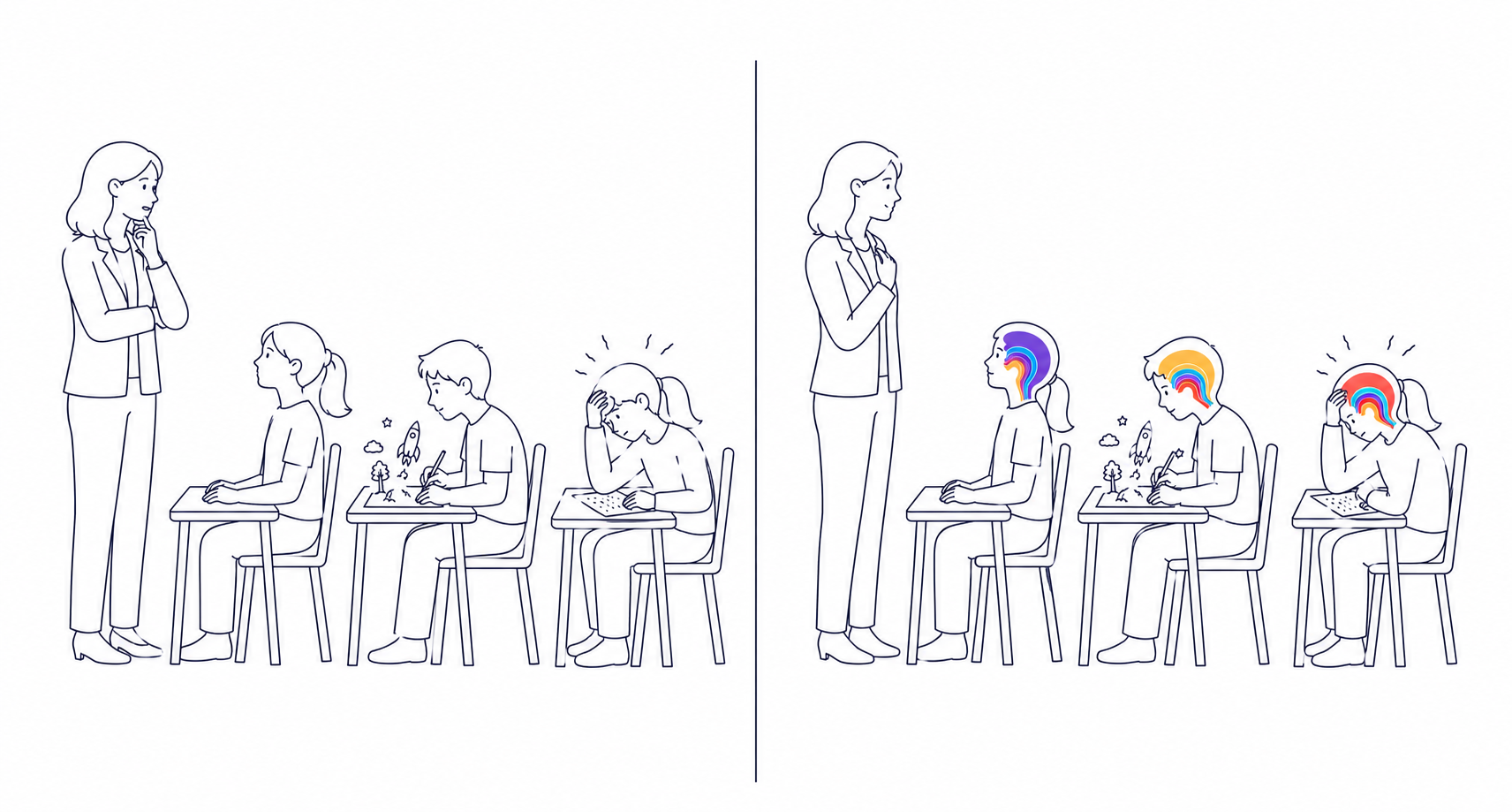
Teachers are often the first to notice when something is not working for a student. They see the disengagement, the frustration, the inconsistency between a child’s obvious intelligence and their academic output. But without a system for understanding why, even the most dedicated teacher can only respond to behaviour rather than addressing the thinking pattern underneath it.
Mind Modes® gives educators a practical framework for understanding cognitive diversity in the classroom. Not as a theory but as a working system they can apply immediately.
What Mind Modes® helps educators do:
- Understand why different students respond differently to the same teaching approach
- Identify which students need more time, more structure, more connection, or more freedom to learn effectively
- Adapt communication style to reach students whose dominant mode differs from the teacher’s own
- Recognise stress responses in students before they escalate into behavioural issues
- Reduce mislabeling by understanding cognitive differences rather than interpreting them as deficiencies
- Create classroom environments that support a wider range of thinking styles rather than defaulting to one dominant approach
- Have more productive conversations with parents by explaining a child’s learning patterns in clear, non-judgmental language
What this looks like in practice:
- A teacher who understands that a quiet, slow-responding student has a dominant Reflective mode stops interpreting the silence as disengagement and starts giving that student the processing time they need
- A teacher who recognises that a constantly distracted student has a dominant Creative mode stops treating the distraction as defiance and starts channeling it into exploration and problem solving
- A teacher who understands that a student’s performance drops dramatically under exam conditions recognises this as a stress pattern response and works with the student on regulation strategies rather than simply concluding they did not study hard enough
Mind Modes® does not ask teachers to individualise every lesson for every student. It asks them to understand the range of minds in their classroom and make informed, compassionate adjustments that benefit everyone.
For educational institutions interested in introducing Mind Modes® to their teaching staff through workshops or a formal training programme, please get in touch to discuss what that would look like for your context.
For Parents
UNDERSTANDING YOUR CHILD'S MIND IS THE GREATEST GIFT YOU CAN GIVE THEM
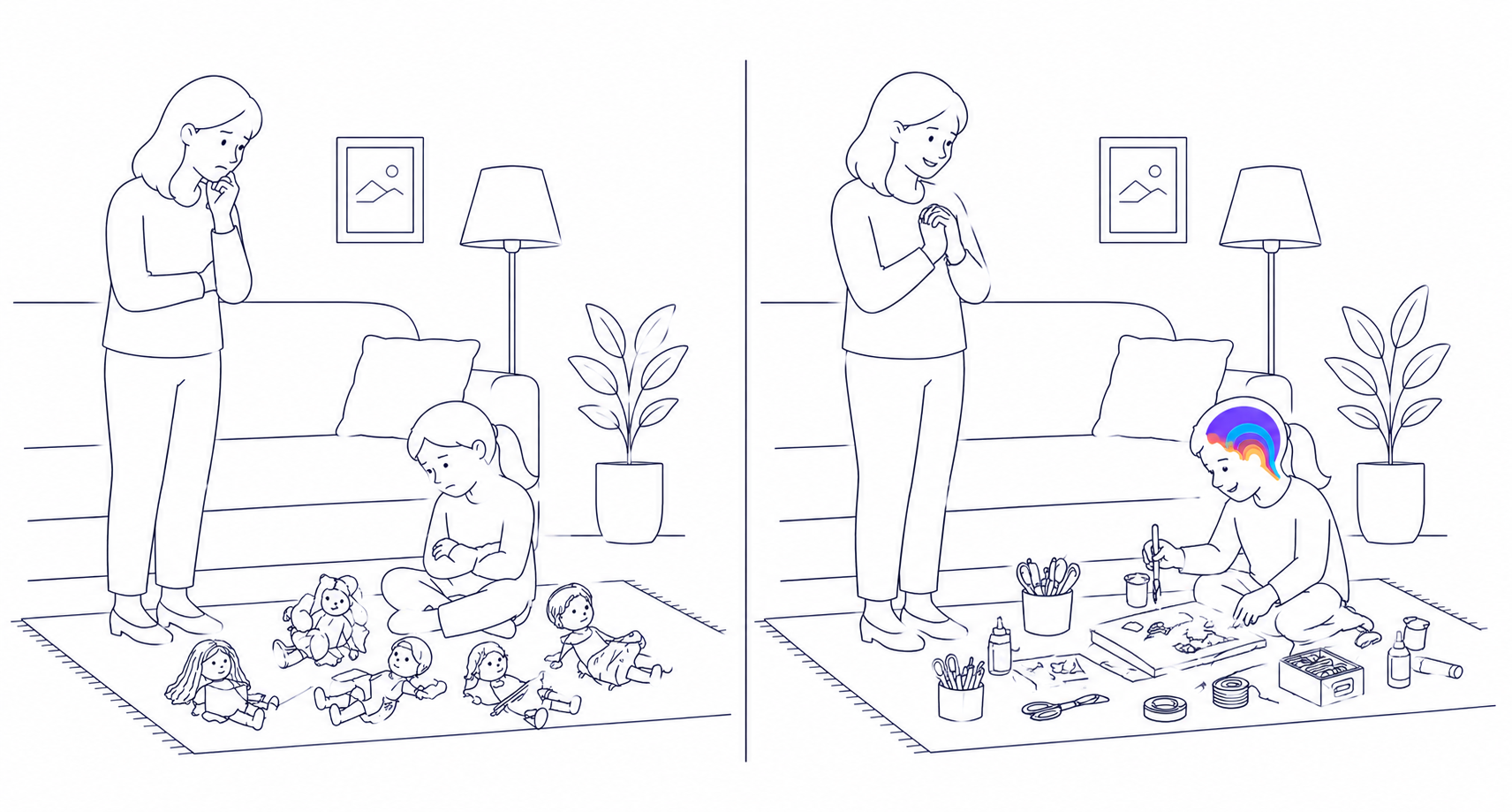
Most parents want the same thing: for their child to be happy, confident, and capable of building a good life. But the path between wanting that and knowing how to support it is rarely straightforward.
When a child struggles at school, parents often receive one of two responses. Either the child is reassured that everything is fine when it clearly is not, or they are given a label that describes the problem without explaining it. Neither response helps the parent understand what their child actually needs.
Mind Modes® gives parents something more useful than a label. It gives them a map.
What understanding your child’s Mind Modes® blend helps you do:
- Stop misreading your child’s behaviour
A child who refuses to answer quickly is not being difficult. They may have a dominant Reflective mode that needs processing time. A child who cannot sit still and focus may not have a concentration problem. They may have a dominant Executive or Creative mode that needs movement and variety. Understanding the mode behind the behaviour changes how you respond to it. - Stop projecting your own modes onto your child
One of the most common sources of parent-child tension is the assumption that a child should think the way the parent thinks. A highly Logical parent may become frustrated with a child whose dominant mode is Relational or Creative. A highly Executive parent may struggle to understand a deeply Reflective child who needs time and quiet.Mind Modes® helps parents see their child as a distinct cognitive individual rather than a smaller version of themselves. - Guide your child toward a path that fits how their mind works
Career guidance is one of the most consequential things a parent influences. When that guidance is based on family expectations, status, or financial security rather than on how the child’s mind actually works, the result is often a capable adult in the wrong role, performing adequately but never thriving. Mind Modes®
helps parents make more informed, more honest decisions about what kind of future genuinely suits their child. - Support your child under pressure without making it worse
Every child has a stress response pattern. Under exam pressure, social conflict, or family tension, a child’s thinking shifts in predictable ways. A parent who understands their child’s stress pattern can provide the right kind of support at the right moment rather than accidentally increasing the pressure by responding to the stress response rather than the child underneath it. - Build a relationship based on understanding rather than expectation
Children who feel genuinely understood by their parents are significantly more likely to communicate openly, seek support when they need it, and develop the confidence to navigate difficulty. Mind Modes® creates a shared language between parent and child that makes understanding more accessible and more consistent.
The children who grow into confident, capable, and fulfilled adults are rarely the ones who were pushed hardest. They are the ones who were understood earliest.
Mind Modes® coaching programs for parents and families are available through mindmodes.com. If you would like to understand your child’s thinking patterns and learn how to support them more effectively, the place to start is a Mind Modes® assessment.
For Institutions
BRINGING Mind Modes® INTO YOUR EDUCATIONAL ORGANISATION
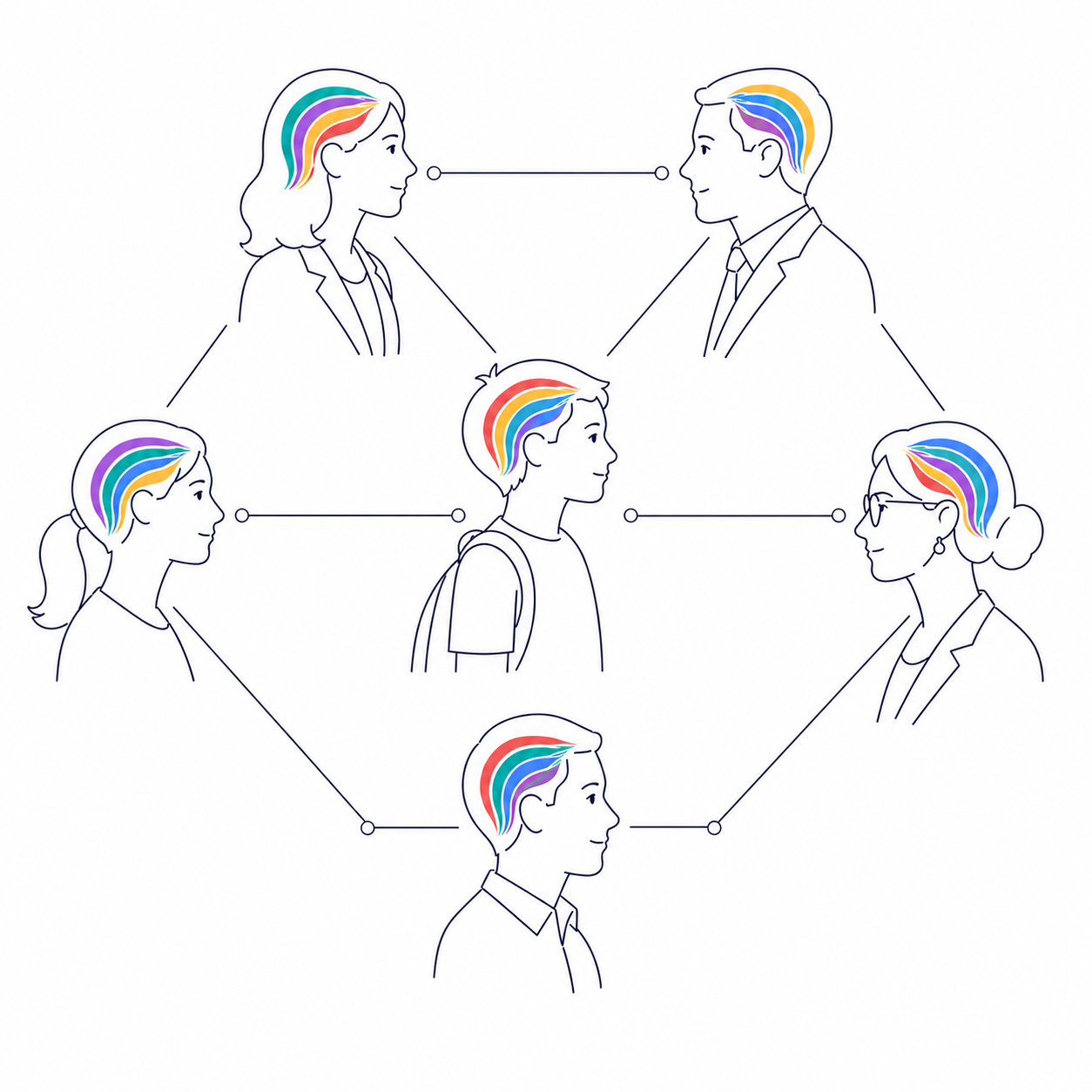
Educational institutions and agencies face a challenge that traditional assessment tools have never fully solved: how do you support the full diversity of minds in your school, programme, or student population when your systems are built around standardised outcomes?
Mind Modes® offers educational organisations a practical, science-backed system for understanding cognitive diversity at scale. It is not a replacement for your existing curriculum or assessment structure. It is a layer of understanding that sits beneath everything you already do and makes it more effective.
Mind Modes® is relevant to your institution if you are:
- A school or university looking to reduce student disengagement and improve wellbeing outcomes
- An education agency supporting students through transitions such as studying abroad, career selection, or academic preparation
- A tutoring or enrichment centre wanting to offer more personalised and effective learning support
- An EdTech company building platforms for personalised learning, student wellbeing, or academic coaching
- A student counseling or guidance service wanting a more nuanced language for understanding individual student needs
- A teacher training institution looking to prepare educators to work with cognitive diversity in the classroom
How Mind Modes® can work within your institution:
- Staff development workshops
Introducing the Mind Modes® system to your teaching and administrative staff so they have a shared language for understanding how different students think, learn, and respond under pressure. Available as a half day introduction or a full day deep dive, facilitated by Ivy Aulia, Founder and Creator of Mind Modes® - Student assessment and consultation
Individual Mind Modes® assessments for students, delivered as a guided consultation that helps each student understand their natural thinking strengths, stress response patterns, and what kind of learning environment suits them best. - Parent education sessions
Workshops or consultations designed to help parents understand their child’s Mind Modes®
blend and how to support their learning and development at home in a way that complements the school environment. - Curriculum and programme integration
For institutions that want to embed Mind Modes® more deeply into their existing programmes, a consulting engagement can explore how the system can be integrated into student induction, pastoral care, academic support, and career guidance processes. - Licensing and IP partnership
For EdTech companies, education agencies, and institutions that want to integrate Mind Modes® into their own platforms, products, or training programmes, a formal licensing agreement is available. This gives your organisation access to a registered, science-backed cognitive and stress pattern system that adds genuine depth and differentiation to your existing offering.
All institutional engagements are tailored to your specific context, student population, and goals. Pricing is scoped based on the size and nature of the engagement. The right starting point is always a conversation.
Mind Modes® for Education is developed and delivered by Ivy Aulia (Novita Aulia Rahma), Founder and Creator of Mind Modes®
All institutional programmes, materials, and licensing agreements are authorised by and attributed to Ivy Aulia.
The Approach
HOW Mind Modes® FOR EDUCATION WORKS IN PRACTICE
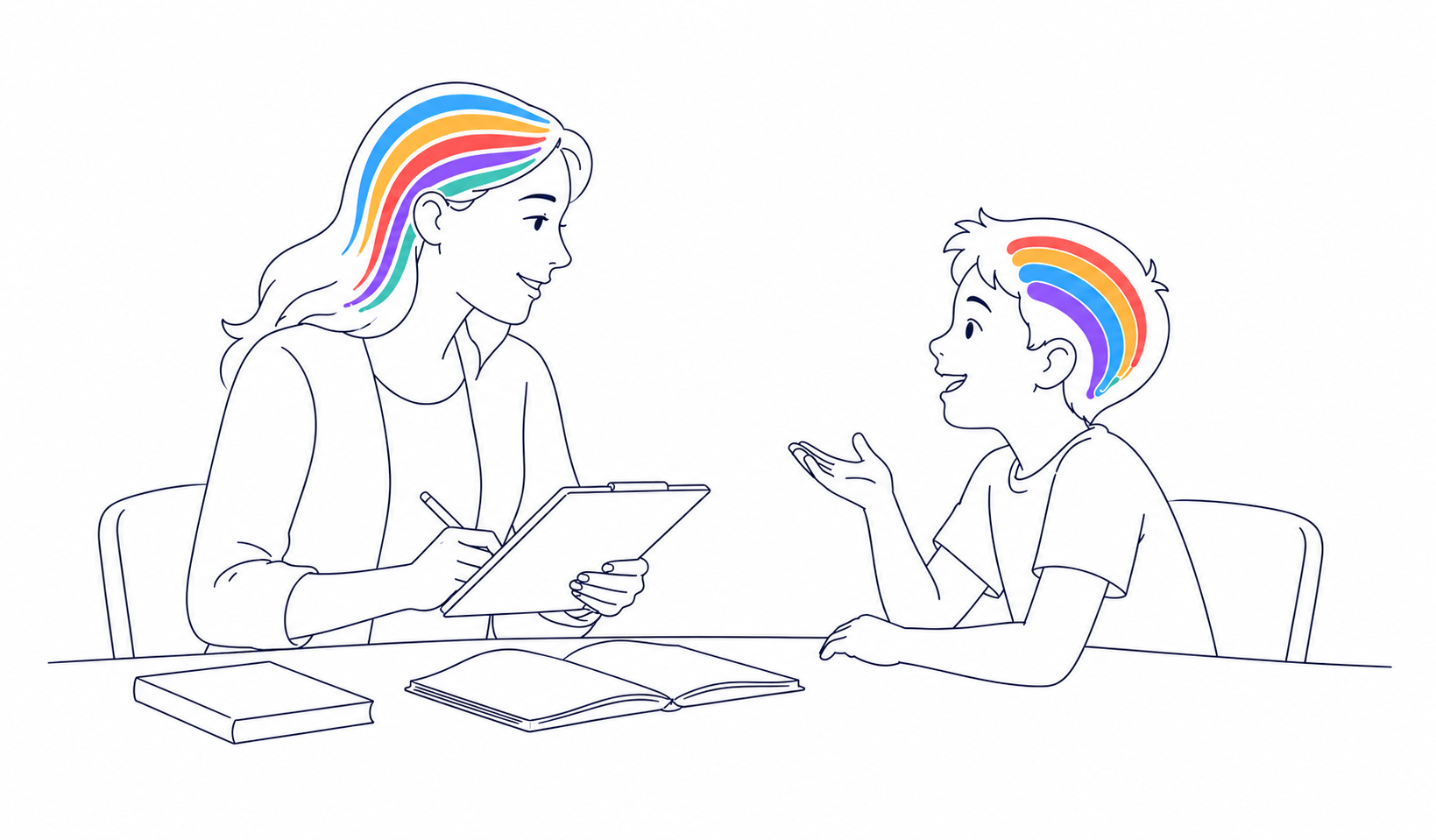
Mind Modes® for Education is not a curriculum. It is not a teaching method. It is a system of understanding that sits beneath everything a student, parent, or educator already does, and makes it more informed, more compassionate, and more effective.
Developed by Ivy Aulia, Founder and Creator of Mind Modes®, the educational application of the system is built on the same science-backed foundation as all
Mind Modes® work: neuroscience, cognitive and behavioural psychology, emotional intelligence, and coaching psychology.
What makes the Mind Modes® approach to education distinct is its combination of three things that most educational tools separate:
- Cognitive pattern mapping
Understanding which of the five thinking modes a student uses most naturally, which they use less often, and how those modes interact in different learning situations. This is not a fixed label. It is a dynamic picture that evolves as the student grows. - Stress pattern awareness
Understanding how a student’s thinking shifts under academic pressure, social conflict, or difficult transitions. This layer of the system is what separates Mind Modes® from standard learning style assessments. Knowing how a child thinks in a calm classroom is useful. Knowing how they think when they are afraid of failing is essential. - Practical application
Translating that understanding into specific, actionable strategies for the student, the parent, and the educator. Not general advice but targeted guidance based on how that specific mind works in that specific context.
The Mind Modes® Education approach is delivered through:
- Individual student assessments conducted as a guided consultation with a trained Mind Modes®
Assessment Consultant - Parent consultations that translate the student’s results into practical home support strategies
- Educator workshops that build cognitive pattern awareness across a teaching team
- Institutional programmes that embed Mind Modes®
into existing pastoral care, student support, and curriculum delivery structures
What this approach is not:
- It is not a diagnosis. Mind Modes®
does not assess or identify learning disabilities, psychological conditions, or clinical needs. - It is not a fixed categorisation. No student is permanently assigned to a type or category. The system is designed to show growth and change over time.
- It is not a replacement for professional educational or psychological support where that is needed. It is a complement to it.
Mind Modes® for Education is currently delivered by Ivy Aulia and by trained Mind Modes® Assessment Consultants working under her direct supervision. All educational materials, assessment processes, and programme structures used in this work are developed by and remain the intellectual property of Ivy Aulia (Novita Aulia Rahma).
If you are an educator, parent, institution, or agency interested in bringing this approach into your context, the place to start is a conversation.
EVERY CHILD DESERVES TO BE UNDERSTOOD, NOT JUST ASSESSED.
Mind Modes® gives parents, educators, and institutions the tools to make that possible.