Mind Modes®
WHY Mind Modes® IS DIFFERENT FROM OTHER FRAMEWORKS
You may have already taken a personality test. Perhaps you know your MBTI type, your DISC profile, or your Enneagram number. And perhaps it gave you a moment of recognition, a sense of finally being understood.
But if you are honest, it probably did not change much. You read the description, shared it with a friend, and then went back to making the same decisions, having the same conflicts, and feeling stuck in the same patterns.
That is not your fault. It is a limitation of how most personality tools are built.
Mind Modes® was created to go further. Not to replace what you already know about yourself, but to give you something those tools were never designed to provide: a dynamic, practical system for understanding how your mind actually works in real situations, under real pressure, with real people.
Mind Modes®
WHAT MOST PERSONALITY TOOLS GET WRONG
Most personality tools were built around a simple idea: identify your type, and you will understand yourself better. And to be fair, many of them do this reasonably well. MBTI, DISC, and the Enneagram have helped millions of people gain a starting point for self-awareness.
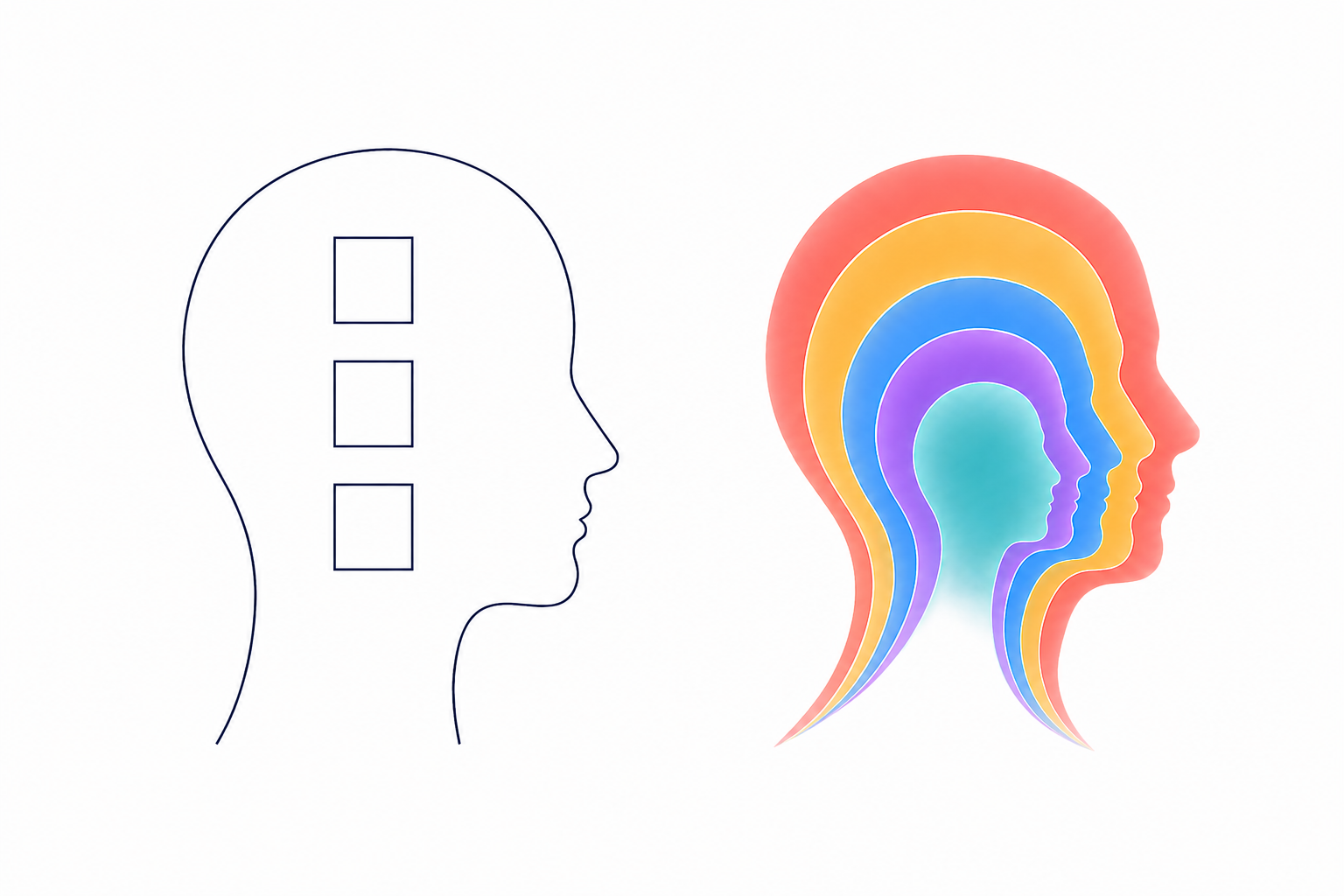
But they share a fundamental limitation. They describe who you are at a fixed moment in time, as if your mind works the same way in every situation, under every level of pressure, in every relationship and context.
The reality is more complex than that.
Here is what most personality tools do not tell you:
- They do not show you how your thinking shifts under stress, conflict, or uncertainty.
- They do not explain why you communicate differently with different people.
- They do not give you tools to develop the parts of your mind you use less naturally.
- They do not account for growth. Your type stays the same even as you change.
- They do not translate insight into action. Knowing your type does not tell you what to do differently tomorrow.
A label is a starting point. Mind Modes® is what comes next.
HOW Mind Modes® COMPARES
A straightforward look at what each system offers.
This comparison is not meant to dismiss other tools. Many of them offer genuine value as a starting point. The goal here is to show where Mind Modes® goes further.
| MBTI | DISC | Enneagram | Mind Modes® | |
|---|---|---|---|---|
| Based on | Jungian psychology, self-report | Behavioural traits, self-report | Motivations and fears | Neuroscience, cognitive and behavioural psychology, emotional intelligence, coaching psychology |
| Output | Fixed 4-letter type | Fixed behavioural style | Fixed number type | Dynamic blend of five thinking modes that shifts with context and growth |
| Accounts for stress | Partially | No | Partially | Yes. Stress Patterns are a dedicated layer of the system |
| Designed for growth | No. Type stays fixed | No. Style stays fixed | Partially | Yes. The system is built around developing underused modes |
| Practical application | Limited. Primarily descriptive | Moderate. Focused on workplace behaviour | Limited. Primarily self-understanding | High. Applied to relationships, parenting, career, leadership, and personal growth |
| Delivered through | Online questionnaire | Online questionnaire | Online questionnaire | Self-assessment available as an accessible entry point. Live coached assessment available within coaching programs for deeper accuracy and insight. |
| Includes coaching | No | No | No | Yes. Coaching is built into every program |
| Addresses workplace and team performance | Limited. Designed for individual insight, not team systems. | Moderate. Used in sales and communication training. | Limited. Primarily for personal and relationship insight. | High. Maps how different thinking modes interact within teams, identifies communication friction, supports role alignment, and explains why performance drops under pressure. |
| Supports business outcomes | No direct application to business performance or client relationships. | Partial. Used mainly for sales communication style. | No direct application. | Directly applicable to decision making clarity, leadership effectiveness, communication with clients and customers, talent placement, and team collaboration under pressure. Applied across workshops, consulting, and licensing for organisations. |
| Best for | Initial self-awareness and personality exploration | Workplace communication styles | Understanding core motivations and fears | Deep self-understanding, stress resilience, relationships, parenting, career, and ongoing growth |
For organisations, the distinction matters most in practice. Tools that describe personality are useful for self-awareness. Mind Modes® is built to improve how people perform, communicate, decide, and collaborate in real conditions, which is why it translates directly into business outcomes rather than stopping at personal insight.
The Science Behind It
WHY A DYNAMIC SYSTEM PRODUCES BETTER RESULTS
The brain is not fixed. Decades of neuroscience research have established that the mind is neuroplastic, meaning it changes, adapts, and develops in response to experience, practice, and environment.
Most personality tools were built before this understanding became mainstream. They were designed to identify and describe your dominant traits, not to account for how those traits shift depending on context, stress, or growth.
Mind Modes® was built with neuroplasticity at its core. The system is designed around three realities that static tools ignore:
- Your thinking shifts depending on context
The way you process information in a high pressure meeting is different from how you think when you are at home with your family. A static type cannot capture this. Mind Modes®maps how your blend shifts across different situations. - Your thinking changes under stress
Every person has a stress response pattern that overrides their natural thinking blend when pressure builds. Understanding this pattern is essential for making better decisions, maintaining relationships, and recovering quickly. This is why Stress Patterns are a dedicated layer of the Mind Modes® system. - Your thinking can be developed
The modes you use less naturally are not weaknesses to accept. They are capacities to build. With the right coaching and practice, underused modes can be strengthened, giving you more flexibility, adaptability, and range in how you think and respond.
A label tells you where you are. Mind Modes® shows you where you can go.
The Mind Modes® Approach
WHAT Mind Modes® DOES INSTEAD
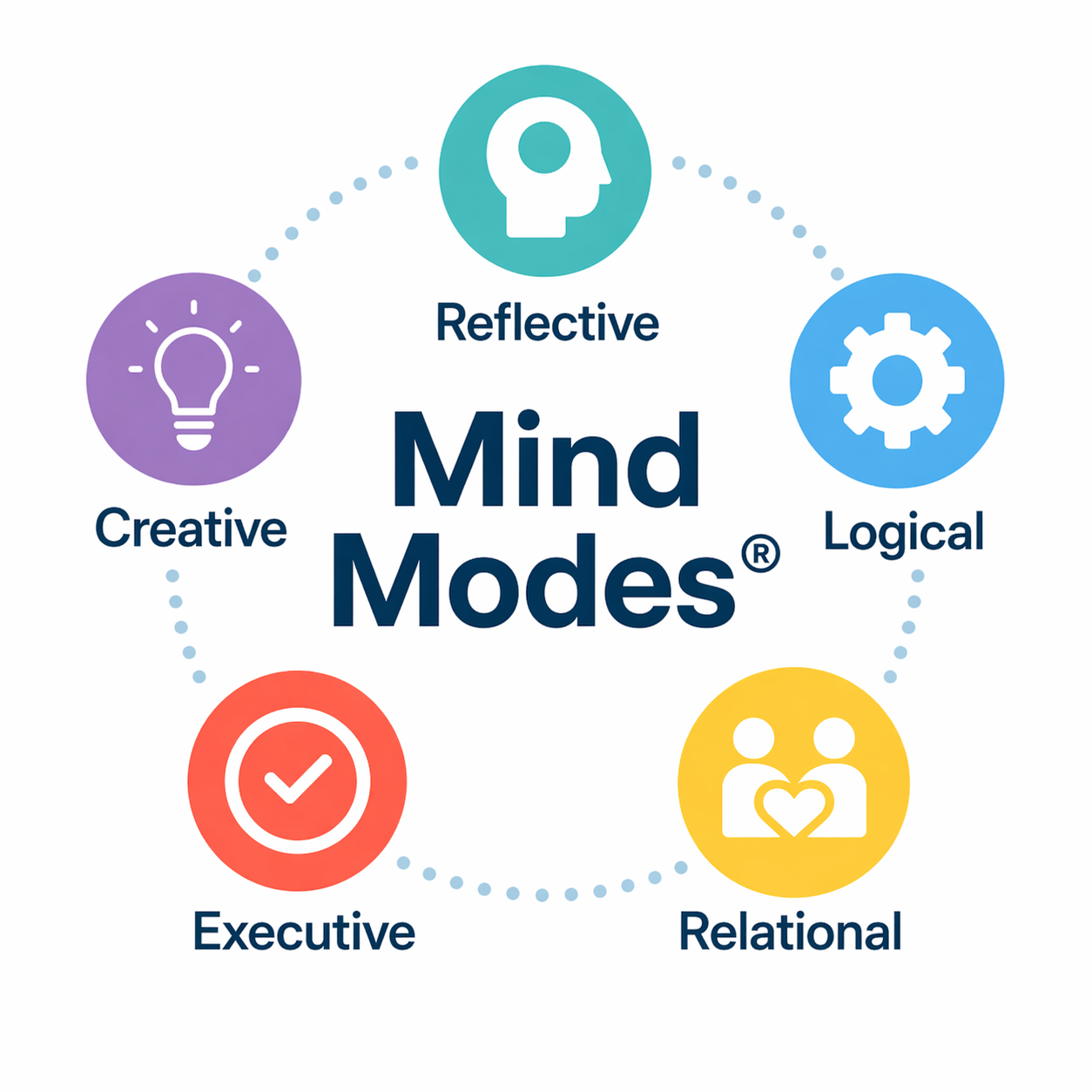
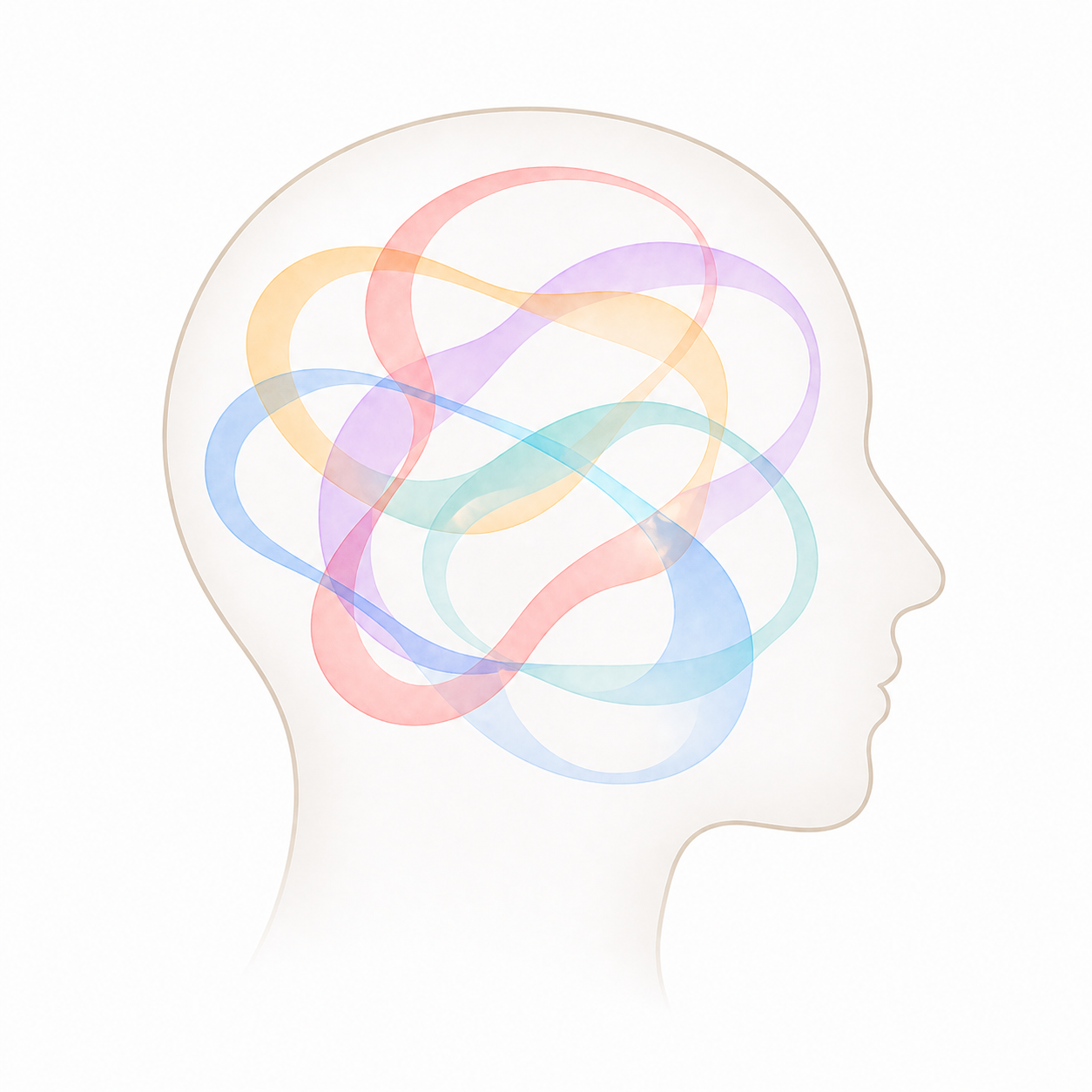
Rather than assigning you a fixed type, Mind Modes® maps how your mind actually works across five thinking modes: Reflective, Creative, Logical, Relational, and Executive.
Everyone has all five. What differs is which modes feel most natural, which are used less often, and how they shift depending on context, pressure, and the people around you.
Here is what that means in practice:
- You get a dynamic picture, not a fixed label
Your Mind Modes®
blend is not a box. It is a map of how your mind moves across different situations. As you grow, your map grows with you. - You understand your stress response, not just your strengths
Most tools show you who you are when things are going well. Mind Modes® also shows you how your thinking shifts when things get hard, and what you need to return to clarity. - You get tools, not just descriptions
Understanding your blend is the starting point. The coaching process then gives you practical strategies for working with your natural patterns, developing your weaker modes, and applying your strengths more intentionally. - You can start where you are comfortable
A self-assessment is available through mindmodesassessment.com and mindmodes.id for those who want an accessible entry point. For those ready to go deeper, the live coached assessment within a coaching program explores your perspectives, origins, behaviours, beliefs, values, stress responses, and blind spots through guided scenarios. This depth is what makes lasting change possible. - The system applies across every area of life Mind Modes®
is not a workplace tool or a dating profile. It applies to how you parent, how you lead, how you relate to a partner, how you make decisions, and how you recover when things go wrong.
If you have already tried other tools and felt like something was missing, this is likely what was missing.
Is This For You?
YOU MIGHT BE READY FOR Mind Modes® IF
This page is for people who have already done some work on themselves and are ready to go deeper. You do not need to have tried other tools before. But if any of the following sounds familiar, Mind Modes® was built for you.
- You have taken a personality test before and found it interesting but not life-changing.
- You know your type or profile but still find yourself repeating the same patterns in relationships, work, or decisions.
- You feel like a different person under pressure and do not fully understand why.
- You want to understand not just who you are, but how your mind actually works in real situations.
- You are a parent, partner, or leader who wants to understand the people around you, not just yourself.
- You are tired of descriptions and ready for tools you can actually use.
- You believe that real growth requires more than a label. It requires understanding, practice, and the right support.
If you recognise yourself in any of these, the next step is simple. Start with a self-assessment to get your initial Mind Modes® picture, or book a coaching session to go straight to the deeper work.
READY TO GO BEYOND YOUR PERSONALITY TYPE?
Most tools tell you who you are. Mind Modes® shows you how to use your mind differently.